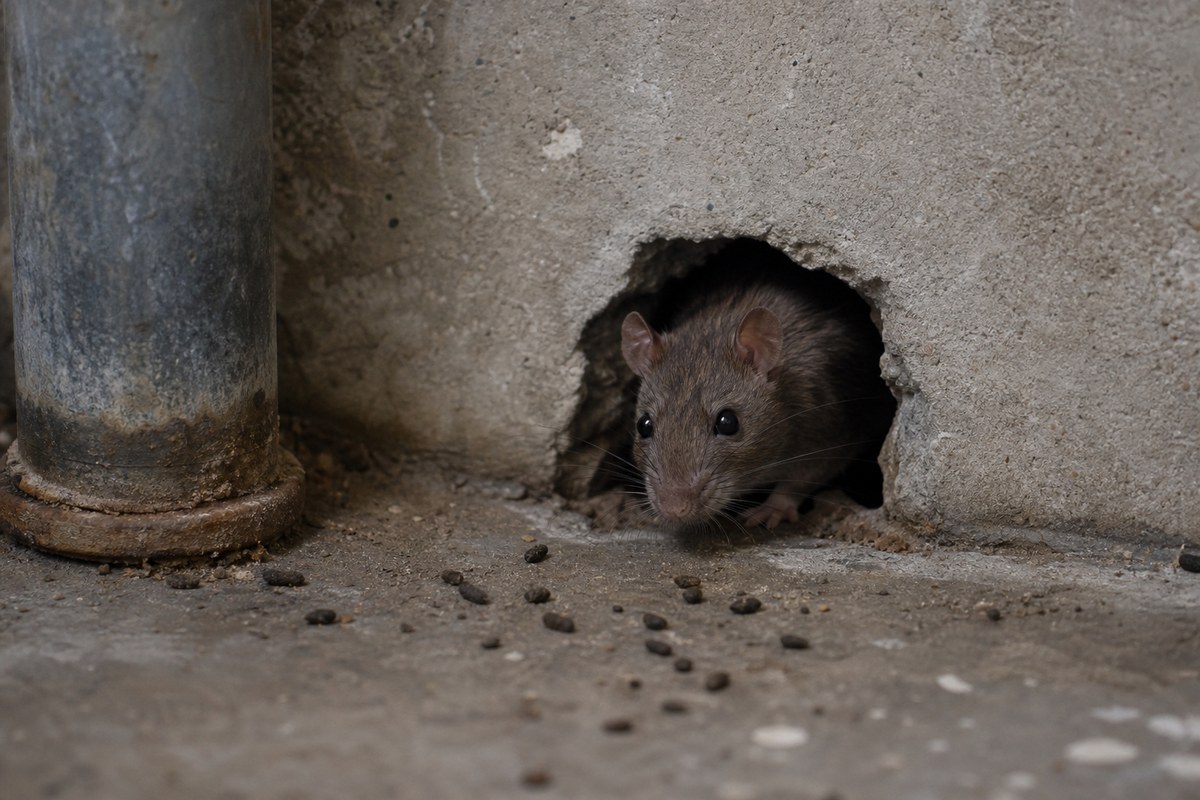
Rodent pressure rarely starts with a dramatic sighting. In warehouses, food plants, and commercial buildings, early signs usually show up in quiet corners — along walls, behind racking, near docks, and around stored product.
Catching those signs early gives your team time to inspect, seal openings, and correct attractants before activity spreads through the facility.
1. Droppings and urine trails
Fresh droppings along baseboards, pallet edges, and storage aisles are one of the clearest early warnings. Look near food storage, packaging, and warm mechanical rooms where rodents travel after dark.
- Check along walls and under racking during night or early-morning walks
- Note concentration near docks, trash rooms, and break areas
- Mark locations so your team can track whether pressure is spreading
2. Gnaw marks on packaging and structure
Mice and rats chew to keep their teeth worn down and to open paths through packaging, foam, wood, and soft building materials. Fresh gnaw marks on bags, boxes, insulation, or door sweeps are a strong signal that rodents are active and feeding nearby.
3. Rub marks and grease trails
Rodents often use the same travel paths. Over time, dirty fur leaves dark rub marks along walls, pipes, and openings. These trails help you map how animals are moving through the building — and where exclusion work should focus.
4. Nesting material and shredded debris
Nests can form in wall voids, cluttered storage, insulation, and unused equipment. Shredded paper, packaging film, or soft debris pulled into a quiet corner often means rodents have settled in, not just passed through.
5. Live or dead rodents, and unusual pet or staff reports
A daytime sighting usually means pressure is already high. Staff reports of scratching in walls, odd smells, or rodents near docks and trash areas should trigger a walkthrough the same day — not a wait-and-see approach.
What to do next
When you see one or more of these signs, treat the situation as a facility issue — not a one-time clean-up. A practical response starts with inspection, then moves into source correction and ongoing monitoring.
- Walk the site and map droppings, gnaw points, and likely entry gaps
- Reduce food, water, and clutter that keep rodents in place
- Seal openings around docks, pipes, and foundation gaps where possible
- Set a monitoring plan so activity stays visible between visits